
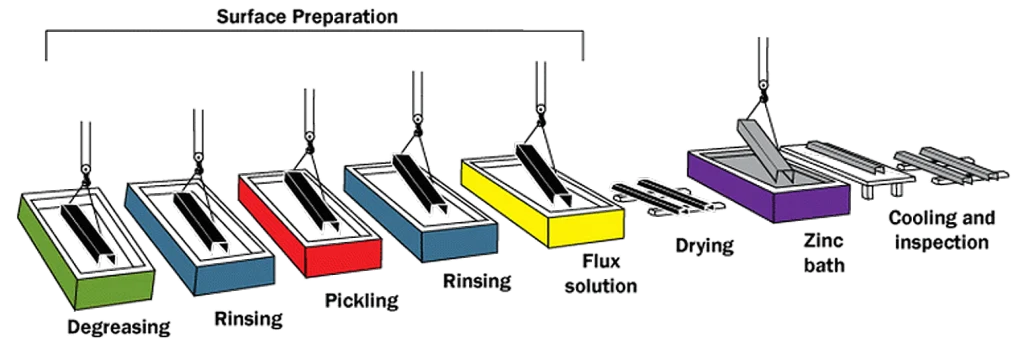

Surface Preparation
The steel is first cleaned to remove any rust, oil, or mill scale. This is typically done through a process called pickling, where the steel is immersed in a solution of acid. Fluxing: After cleaning, the steel is fluxed to remove any
Fluxing
After cleaning, the steel is fluxed to remove any remaining oxides and to promote the bonding of the zinc coating. Fluxing is usually done by dipping the steel into a flux solution or by applying a powdered flux.
Galvanizing Bath
The cleaned and fluxed steel is then immersed in a bath of molten zinc at temperatures typically around 450°C (850°F). The zinc reacts with the surface of the steel to form a series of zinc-iron alloy layers.
Quenching
After immersion, the steel is withdrawn from the zinc bath and allowed to cool. This can be done by air cooling or quenching in water.
Corrosion Protection
The primary purpose of galvanizing steel is to protect it from corrosion. The zinc coating acts as a physical barrier between the steel and the surrounding environment, preventing rust and corrosion.
Durability
Galvanized steel is known for its long-lasting durability. It can withstand exposure to harsh weather conditions, extreme temperatures, and other environmental factors without degrading.
Cost-Effective
While the initial cost of galvanizing might be higher than some other coating methods, the long-term cost benefits are significant. Galvanized steel requires minimal maintenance and offers a longer lifespan, reducing the need for frequent replacements.

 Reach us on WhatsApp